Eye Hospital in Kukatpally, Hyderabad | Advanced Eye Care & Treatment
MediVision Eye Care Centre brings 34+ years of experience, 1,20,000+ successful surgeries and 50+ eye specialists — with advanced cataract, LASIK, SILK, retina, glaucoma and paediatric eye care at KPHB, Kukatpally.
- Comprehensive Eye Care
- Experienced Ophthalmologists
- Advanced Diagnostic Facilities
- Convenient KPHB Location
- Sunday Consultations Available
About MediVision Eye Care Centre, Kukatpally (KPHB)
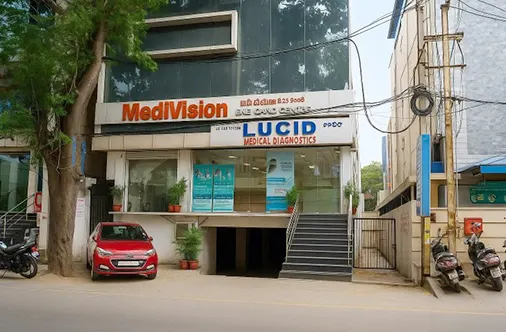
MediVision Eye Care Centre's Kukatpally branch is located at MIG 332, Road No. 4, Phase 1, KPHB Colony — easy to reach from Kukatpally, JNTU, Moosapet, Pragathi Nagar, Nizampet, Hydernagar and Miyapur. The centre cares for patients of every age group, from children needing their first vision test to senior citizens managing cataract or glaucoma.
At this branch, you can access eye consultations, detailed diagnostic evaluations and surgical eye care under one roof. Every visit begins with a thorough examination, followed by a clear discussion of your diagnosis and the options suitable for you. Treatment plans are personalised — our ophthalmologists explain what is happening with your eyes in simple language, so you can make informed decisions without pressure.
With extended weekday hours and Sunday morning consultations, the KPHB team also supports you after treatment with structured follow-up care and practical guidance for protecting your vision.
Advanced Eye Treatments in Kukatpally
The MediVision KPHB centre offers comprehensive care for every age and every eye condition, delivered under one roof by experienced sub-speciality teams. For cloudy or dimming vision, our surgeons perform advanced micro-incision cataract surgery with a choice of premium IOL options, planned only after a detailed evaluation. People looking to reduce dependence on glasses can be assessed for LASIK and refractive surgery or the newer flapless SILK procedure, with suitability confirmed through thorough pre-testing.
Speciality care extends to the cornea — including keratoconus cross-linking and transplant care — and the retina, covering retinal tears, macular disease and diabetic retinopathy screening for people living with diabetes. Our glaucoma team provides eye-pressure checks, optic-nerve evaluation and long-term management, while oculoplasty addresses eyelid, tear-duct and orbit conditions.
Families are equally cared for: paediatric eye care and squint correction for children, dry-eye and computer-vision-syndrome care for working professionals, and accurate vision and spectacle-power testing for everyone.
Eye Symptoms You Shouldn't Ignore
Many eye conditions develop quietly. Blurred or cloudy vision, glare and halos around lights, or difficulty seeing at night can point to cataract, while frequent spectacle-power changes and persistent headaches often mean it's simply time for an updated eye test. Flashes, floaters or shrinking side vision deserve prompt attention, as they can involve the retina or optic nerve.
Some signs are easy to dismiss — watery or dry eyes after long screen hours, mild redness, or a child squinting at the board in school. Checking them early is far easier than treating them late, and if you have diabetes, a periodic retina check matters even when your vision feels completely normal.
If any of these sound familiar, a comprehensive eye examination at our Kukatpally centre will identify the cause and the right next step for you.
Book an Eye Check-Up- Blurred or cloudy vision
- Frequent changes in spectacle power
- Eye redness or irritation
- Eye pain
- Persistent headaches
- Halos around lights
- Flashes or floaters
- Difficulty seeing at night
- Watery or dry eyes
- Squinting in children
- Reduced side (peripheral) vision
- Vision changes with diabetes
Why Choose MediVision Kukatpally?
MediVision's KPHB centre brings multiple eye specialities under one roof — cataract, refractive, retina, glaucoma, cornea, paediatric and oculoplasty care — so referrals between specialities happen within the branch, saving you time and repeated registrations. Your care is led by experienced consultant ophthalmologists, including phaco, refractive and vitreo-retinal surgeons, who examine you personally and explain findings in language you understand.
No two eyes are the same, so recommendations are personalised to your examination results, lifestyle and health conditions — and you're encouraged to ask questions before choosing any treatment. Detailed eye examinations and diagnostic testing support every decision, so your treatment rests on clear clinical evidence rather than guesswork.
The KPHB Colony centre is easy to reach from across Kukatpally and nearby areas, open till 8:30 PM on weekdays and Saturdays with Sunday morning consultations. And care doesn't end after your visit — the team schedules reviews, explains medication and home care, and stays available for your questions during recovery.
Complete Eye Testing Facilities in Kukatpally
You don't need to travel across Hyderabad for a detailed eye check-up. The MediVision KPHB centre houses the full range of eye-testing facilities — vision and spectacle-power testing, glaucoma screening, diabetic retina checks, LASIK and SILK suitability testing, and pre-surgery measurements for cataract — all at Road No. 4, KPHB Colony.
A complete eye examination here typically takes 45 minutes to a couple of hours, depending on the tests your doctor advises. If dilating drops are used for a retina check, near vision stays blurry for a few hours, so plan your travel accordingly. Reports are shared and explained the same day, and if a speciality opinion is needed, our retina, refractive and cataract surgeons are available at this branch itself.
For working professionals and students around KPHB, JNTU and Nizampet, evening slots till 8:30 PM and Sunday morning consultations make it easy to get tested without missing work or classes.
Your Visit, Step by Step
Book an Appointment
Call or message us on WhatsApp. The team confirms a convenient slot with you.
Complete Your Eye Examination
Undergo a detailed check-up. Some tests use dilating drops, so vision may be blurry for a few hours.
Discuss Diagnosis & Options
Your doctor explains the findings clearly and walks you through suitable treatment options.
Treatment & Follow-Up
Receive the agreed treatment with scheduled reviews and practical guidance for recovery.
How to Reach MediVision Kukatpally
MIG 332, Road No. 4, Phase 1, KPHB Colony, Hyderabad – 500072
Sunday: 8:00 AM – 2:00 PM
Protect Your Vision with Expert Eye Care in Hyderabad
Book a consultation at your nearest MediVision branch today — Masab Tank or Kukatpally (KPHB).
Frequently Asked Questions
Where is MediVision eye hospital located in Kukatpally?
The Kukatpally branch is at MIG 332, Road No. 4, Phase 1, KPHB Colony, Hyderabad – 500072 — easily reachable from Kukatpally, JNTU, Moosapet, Nizampet, Pragathi Nagar, Hydernagar and Miyapur. It is open Monday to Saturday, 8:00 AM to 8:30 PM, and Sunday, 8:00 AM to 2:00 PM.
How do I book an eye appointment at MediVision Kukatpally?
Call +91 90000 16277 or message us on WhatsApp. The front-desk team will call you back to confirm a convenient slot. No referral is needed to consult an ophthalmologist.
What technology is used for cataract surgery at MediVision?
Cataract surgery at MediVision uses advanced micro-incision phacoemulsification, with a choice of intraocular lens (IOL) options including monofocal, toric and multifocal lenses. Your surgeon will examine your eyes, explain the lens options suitable for your vision needs and lifestyle, and help you choose the right time for surgery.
Am I a candidate for LASIK or SILK laser vision correction?
Suitability for LASIK or SILK depends on your age, how stable your spectacle power is, your corneal thickness and shape, and overall eye health. A detailed pre-refractive evaluation at the Kukatpally centre confirms whether laser vision correction is right for your eyes — and which procedure fits you best.
Does MediVision treat children's eye problems?
Yes. The Kukatpally centre offers paediatric eye care, including vision and spectacle-power testing, squint evaluation and guidance for concerns like frequent headaches or sitting too close to screens. Children are examined patiently in a friendly setting, and parents receive clear advice on glasses, monitoring or further treatment.